Nebraska National Forest occupies a landscape that does not match any conventional picture of what a national forest looks like. There are no mountains here, no glacial lakes, no rivers plunging off granite. What there is instead is the Nebraska Sandhills, one of the largest stabilized sand dune systems in the Western Hemisphere, an ocean of grass-covered dunes that stretch for miles in every direction with almost nothing man-made in sight. The Nebraska sky is enormous and the silence is nearly complete.
Into this emptiness, the federal government did something remarkable beginning in 1902: they planted trees. Millions of them, by hand, over decades of work, creating what became the largest hand-planted forest in the United States. The result is the Bessey Division near Halsey, where ponderosa pine and eastern red cedar now grow on Sandhills soils that were entirely treeless a century ago. The forest is real, and it is dense, and walking through it is genuinely surprising, a place that should not exist but does, and that serves as a quiet, uncrowded destination for hikers, birders, and anyone who wants to experience the northern Great Plains on foot.
Why Nebraska National Forest Stands Out
The planted forest at Bessey. The Bessey Division contains the core of the hand-planted forest experiment, now a mature stand of ponderosa pine and eastern red cedar covering the Sandhills landscape around Halsey. The USFS Bessey Nursery still operates here, one of the oldest tree nurseries in the country, producing millions of seedlings annually for restoration projects across the Great Plains. The Bessey Nature Trail winds through the nursery and planted forest with interpretive signs explaining the history and ecology of the planted forest.
Dismal River. The Dismal River rises from Sandhills springs and flows year-round through the heart of Nebraska National Forest, a rare thing in the Great Plains where most rivers run dry by late summer. The river is shallow, clear, and cold, its flow entirely sustained by the enormous Sandhills aquifer. The Dismal River Trail follows it through cottonwood groves and open Sandhills meadows. Canoeists find the Dismal a reliable float from spring through fall.
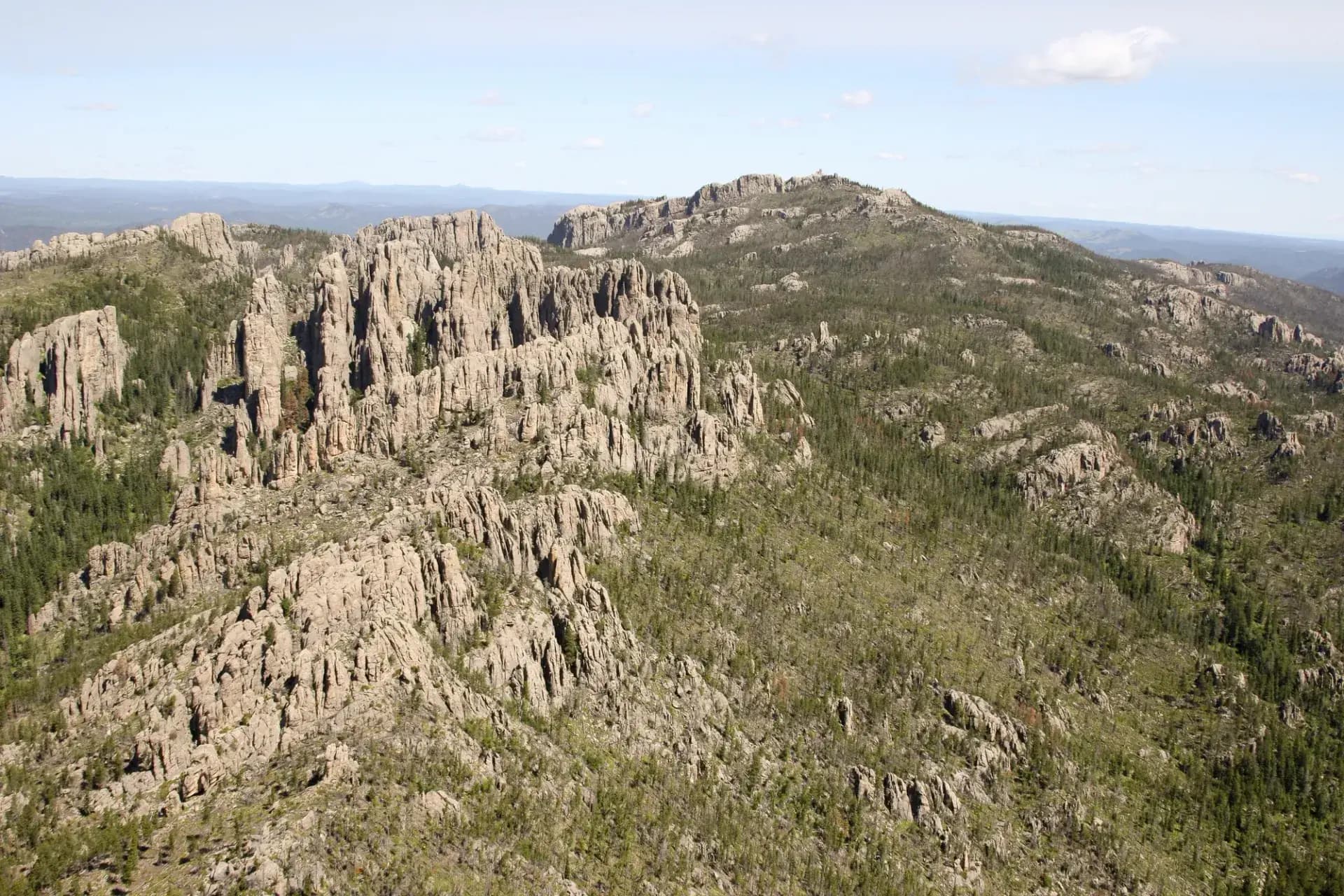
Pine Ridge country. The northern unit of the forest, managed by the Pine Ridge Ranger District out of Chadron, is a different landscape entirely: a ponderosa pine and cedar escarpment that drops sharply from the High Plains down to the White River valley. This is canyon and mesa country, geologically related to South Dakota's Badlands, with eroded spires, colorful soils, and views that extend for miles. The Pine Ridge Trail and Scott Lookout Trail explore this country.
Best Trails
The Scott Lookout National Recreation Trail (8.5 miles, moderate) is the most scenic hiking route in the forest, climbing through Pine Ridge country to a historic fire lookout with panoramic views of the Nebraska panhandle. The Dismal River Trail (5 miles, easy-moderate) is the primary trail in the Bessey Division, following the river through cottonwood and Sandhills terrain.
The Bessey Nature Trail (2.5 miles, easy) is the best introduction to the planted forest and nursery operations, with interpretive signs explaining the unique history of the Bessey Division. The Pine Ridge Trail (7 miles, moderate) traverses the edge of the Pine Ridge escarpment in the northern unit.
The Sandhills Loop Trail (4 miles, easy-moderate) offers the best experience of pure Sandhills terrain. The Soldier Creek Trail (6 miles, moderate) in the Pine Ridge unit follows a canyon stream through cedar breaks. The Whitetail Loop (3 miles, easy) circles through planted pine near Bessey Campground. The Middle Loup River Walk (3.5 miles, easy) follows another spring-fed Sandhills river near the forest boundary.
Permits and Passes
No permit is required for day hiking or dispersed camping in Nebraska National Forest. Developed campground sites require a small fee (as of 2026). The America the Beautiful pass covers day use fees where applicable. Veterans and active military have additional pass options covered in our veteran benefits guide.
Fire restrictions are in effect during dry periods, which can come early in Nebraska's hot summers. Check current conditions at the USFS Nebraska website or our checking conditions guide before your visit.
Camping
Bessey Campground (27 sites) is the main campground in the forest, located near the Bessey Nursery and Nature Trail. It has vault toilets, water, and a pleasant setting in the planted ponderosa forest. Reservations through Recreation.gov are available and recommended on summer weekends.
East Campground (18 sites) is a first-come, first-served option on the east side of the Bessey Division with a similar pine setting. Less busy than Bessey Campground and a good choice for mid-week visits.
Pine Ridge Campground (12 sites) serves the northern unit near Chadron, a primitive facility with vault toilets in a canyon setting convenient to the Pine Ridge and Scott Lookout trails.
Dispersed camping is permitted throughout national forest land. The Sandhills terrain provides many natural flat spots away from forest roads and rivers, and the forest's low visitation means finding a quiet dispersed site is rarely difficult.
When to Visit
April and May are excellent months for birding. Sharp-tailed grouse dancing on leks can be observed from designated viewing blinds near the forest in early April. Sandhill cranes and waterfowl pass through the Platte River corridor just south of the forest in late March and April. Wildflowers bloom in Sandhills meadows in May.
June through August are warm with peak foliage on the cottonwood and planted forest understory. The Dismal River is low enough for easy canoeing. Temperatures often reach the 90s in July and August; early morning hiking is most comfortable.
September and October bring cooler temperatures, deer rut activity, and fall color from Sandhills cottonwoods. Hunting season begins in September; deer, turkey, and pheasant hunting attract visitors to the forest's remoter areas.
November through March is quiet and cold, with the Bessey Nursery largely dormant. Snow covers the Sandhills from December through February in most years. The forest is hikeable on clear days but most facilities close for winter.
Getting There
From North Platte: Take US-83 north about 85 miles to Halsey. The Bessey Ranger District headquarters is in Halsey, 1 mile from the campground. Allow about 1.25 hours.
From Broken Bow: Take US-2 northwest about 30 miles to Halsey. The drive crosses Sandhills terrain along US-2, one of the more scenic drives in the Great Plains.
From Chadron (Pine Ridge unit): The Pine Ridge unit is managed from Chadron on US-20. Soldier Creek and Scott Lookout trailheads are accessed from forest roads south of Chadron. Allow 30 to 45 minutes from Chadron to most trailheads.
Practical Tips
Ticks are present from April through August in the Sandhills and cedar country. Wear long pants and insect repellent, and do tick checks after any outing through shrubby terrain. Consult CDC tick prevention guidelines.
Rattlesnakes (prairie rattlesnake) inhabit rocky areas of the Pine Ridge unit and occasionally the sandy openings of the Bessey Division. Follow USFS guidance: watch where you step, give snakes encountered on trail plenty of space, and stay on trail in rocky terrain.
Wildfire is a real risk in dry summers. The planted forest and surrounding Sandhills grass are flammable. Check fire restrictions before visiting in July and August, and follow all campfire rules strictly.
Leave no trace principles matter particularly in the Sandhills, where vegetation on dune crests is fragile and easily disturbed. The Leave No Trace seven principles cover camping, fire management, and wildlife considerations. Check our checking conditions guide for current road and trail conditions.