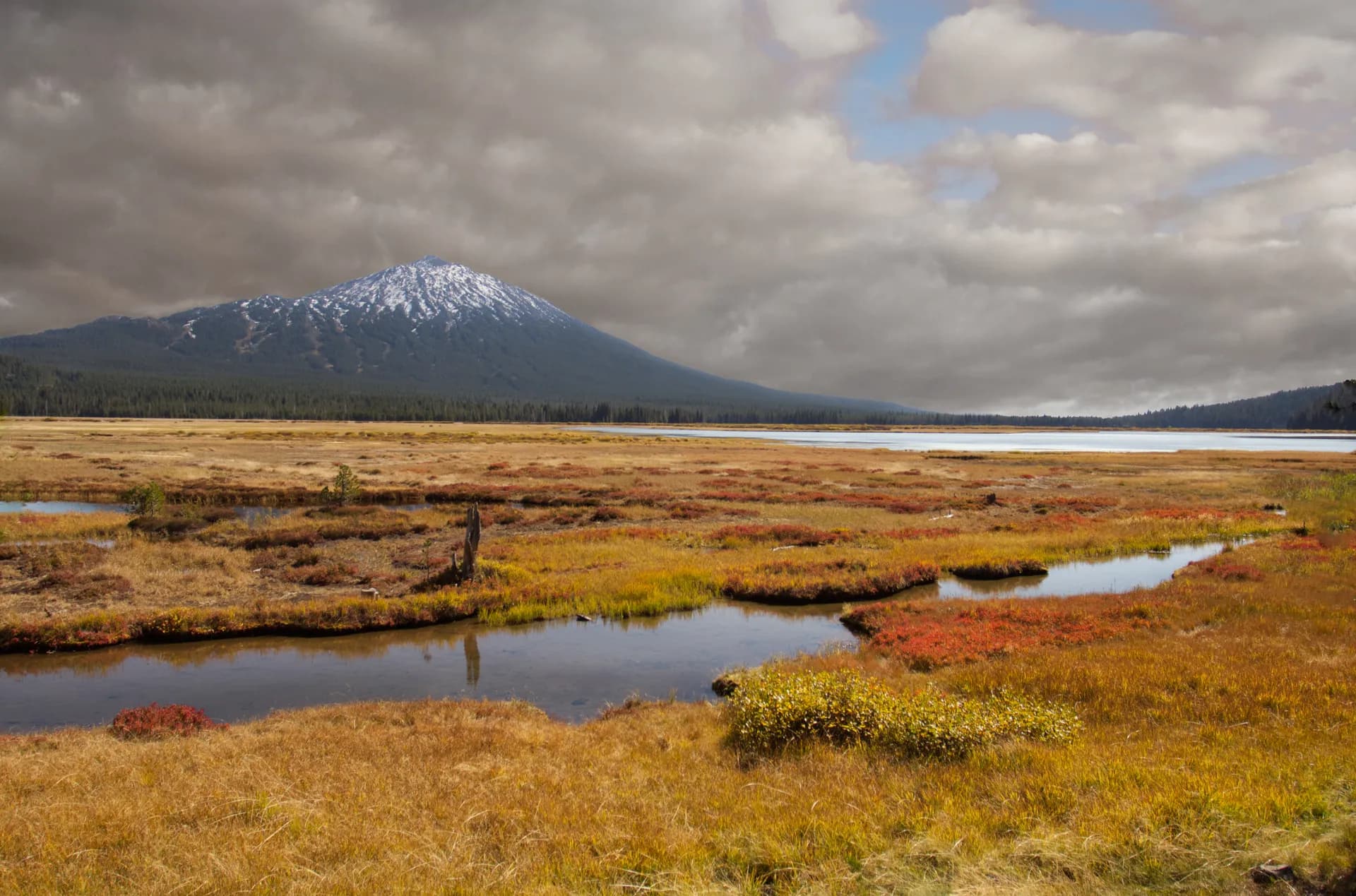
Mount Hood National Forest covers over 1 million acres of Oregon's Cascade Range, anchored by the state's tallest peak at 11,250 feet. It's the closest national forest to Portland (about 60 miles east on US-26), which makes it one of the most visited forests in the Pacific Northwest. On a clear day, you can see the mountain from downtown Portland, and that proximity is both its greatest asset and its biggest planning consideration.
The forest stretches from the Columbia River Gorge in the north to the Olallie Scenic Area in the south. Within those boundaries, you'll find over 1,200 miles of trails, eleven ski areas (including the only year-round ski resort in North America at Timberline Lodge), dozens of alpine lakes, and four designated wilderness areas: Mount Hood Wilderness, Salmon-Huckleberry Wilderness, Badger Creek Wilderness, and Bull of the Woods Wilderness.
Whether you're after a quick day hike to a waterfall, a multi-day backpacking loop around the mountain, or a week of car camping with the family, Mount Hood delivers. Just don't expect solitude on summer weekends without some effort.
Best Times to Visit
Summer (June through September): This is prime time. Snow clears from most trails by late June, though higher routes like the Timberline Trail may hold snow into mid-July. Wildflower meadows peak in late July and early August, particularly at Paradise Park and on the west side of the mountain. Expect crowds at popular trailheads, especially Mirror Lake, Ramona Falls, and Tamanawas Falls. Arrive before 8 AM on weekends or plan for midweek trips.
Fall (October through November): Underrated season. Crowds thin dramatically after Labor Day, and the vine maple and huckleberry turn brilliant red and orange through October. Nights get cold (lows in the 20s and 30s at elevation), and the first dustings of snow typically arrive on the peak by mid-October. Many campgrounds close by early October, but the trails remain accessible.
Winter (December through March): The mountain transforms into a winter sports hub. Timberline Lodge, Mt. Hood Meadows, Mt. Hood Skibowl, and Cooper Spur offer downhill skiing and snowboarding. Cross-country skiing and snowshoeing are popular on Trillium Lake, the Teacup Lake trails, and White River Sno-Park. Chains or traction tires are required on US-26 and OR-35 during winter conditions.
Spring (April through May): A transitional period. Lower elevation trails (below 3,000 feet) open up while higher routes remain snow-covered. Waterfalls run at full force. The weather is unpredictable, with rain, sun, and even snow possible in the same day. It's a good time for fishing as the rivers come alive with spring runoff.
Top Trails
Mount Hood has trails for every ability level, from paved interpretive walks to multi-day wilderness routes. Here are three of the best.
Timberline Trail (41.1 miles, Strenuous)
The crown jewel. This 41.1-mile loop circumnavigates Mount Hood, passing through five ecological zones, crossing glacial rivers, and traversing alpine meadows with views that don't quit. Most backpackers complete it in 3 to 5 days. The trail shares tread with the Pacific Crest Trail for about 7 miles on the west side. Late July through September is the window, and even then, expect challenging river crossings at Sandy River, Eliot Branch, and Coe Branch. Not recommended for dogs due to the crossings.
Mirror Lake (3.2 miles, Easy to Moderate)
The most popular short hike on the mountain for good reason. The 3.2-mile out-and-back trail climbs 700 feet through forest to an alpine lake that reflects Mount Hood on calm mornings. It's family-friendly, dog-friendly, and rewarding even for experienced hikers who add the scramble up Tom Dick and Harry Mountain (an additional 3 miles round trip with 1,300 feet of gain) for panoramic views. The trailhead on US-26 fills fast, so plan accordingly.
Ramona Falls (7.1 miles, Moderate)
A 7.1-mile loop to one of Oregon's most photogenic waterfalls, where Ramona Creek drops 120 feet over a mossy basalt cliff in a curtain of thin cascades. The trail passes through old-growth Douglas fir and Western red cedar forest and crosses the Sandy River (a seasonal footbridge is typically in place from June through October). The falls are worth the trip, and the loop format keeps the hike interesting in both directions.
Campgrounds
Mount Hood has over 80 developed campgrounds. Here are four solid options across different price points and experiences.
Lost Lake Campground is the showpiece. With 125 sites on the north shore of Lost Lake, it offers postcard views of Mount Hood reflected in the water. Sites run $30 to $40 per night and are reservable through Recreation.gov. The general store rents canoes and kayaks. Open May through October.
Trillium Lake Campground sits at 3,600 feet elevation on a small lake just south of Government Camp. The 57 sites are reservable and cost $26 per night. It's a great base camp for families, with easy lake access, fishing, and short trails nearby. The lake freezes in winter and becomes a popular snowshoe destination. Open late May through September.
McNeil Campground is a solid choice for hikers heading to Ramona Falls, McNeil Point, or the Timberline Trail's north side. The 34 first-come, first-served sites cost $20 per night and sit along the Sandy River at 2,040 feet. It's quieter than the lakeside campgrounds and rarely fills on weekdays. Open May through September.
Tollgate Campground is a small, no-frills option near Rhododendron with 15 first-come, first-served sites at $18 per night. It's the closest campground to Portland on the US-26 corridor, making it convenient for a quick overnight. The Zigzag River runs through the campground. Open May through September.
Permits and Passes
Two permits cover most activities in Mount Hood National Forest.
Northwest Forest Pass: Required for parking at most developed trailheads. Day passes cost $5, or you can buy an annual pass for $30. The Interagency Annual Pass ($80) and America the Beautiful Senior Pass ($20 lifetime) also work. You can purchase passes at ranger stations, REI, and many local outdoor shops. Not having one will get you a $75 to $150 citation.
Wilderness Permit: Required for all day hikes and overnight trips in the four wilderness areas. These are free and self-issued at registration boxes at trailhead kiosks. Just fill out the form, tear off the tag, and attach it to your pack. For overnight trips, you must also follow Leave No Trace practices and camp at least 200 feet from water sources in the wilderness.
Campfire Permits: During fire season (typically July through October), you need a free campfire permit to use a camp stove in the wilderness, even if you're not building a wood fire. Check the forest website for current fire restrictions before your trip. In high fire danger years, all fires (including stoves) may be prohibited in certain areas.
Getting There from Portland
Mount Hood National Forest is one of the most accessible national forests in the country. From downtown Portland, take US-26 East through Gresham and Sandy. You'll hit the forest boundary in about an hour, and Government Camp (the main hub for services) is 60 miles out, roughly 1.5 hours in normal traffic.
For the north side of the mountain (Cooper Spur, Cloud Cap, Elk Meadows), take I-84 East to Hood River and then OR-35 South. Hood River is about 65 miles from Portland, and from there it's another 25 miles to the Cooper Spur area.
Gas up in Sandy or Government Camp. There's no fuel on most forest roads. Cell service is spotty to nonexistent once you leave the US-26 corridor, so download your maps and trail info before you go.
Winter driving note: ODOT requires chains or traction tires on US-26 from the Sandy area to Government Camp when conditions warrant. Check TripCheck.com for current road conditions. The stretch through the pass can close entirely during severe storms.
Winter Activities
Mount Hood is Oregon's winter sports capital, and it's one of the few places in the lower 48 where you can ski 12 months a year.
Downhill skiing and snowboarding: Timberline Lodge operates the Palmer Snowfield for summer skiing at 8,500 feet. In winter, Mt. Hood Meadows is the largest resort with 2,150 acres of terrain and 87 runs. Mt. Hood Skibowl offers night skiing and is the closest resort to Portland. Cooper Spur, on the northeast side, is a smaller, family-oriented option with lower prices and shorter lift lines.
Cross-country skiing and snowshoeing: Teacup Lake Nordic Area has over 12 miles of groomed cross-country trails maintained by a volunteer club (donations appreciated). Trillium Lake and White River West Sno-Park are popular snowshoe destinations. A Sno-Park permit ($4/day or $30/season) is required for winter parking at most snow recreation areas.
Winter camping: A few brave souls camp at the snow-covered campgrounds, but the more practical option is to rent a cabin. Lost Creek Cabin and Fivemile Butte Lookout are two forest service rentals available through Recreation.gov in winter.
Wildlife and Ecology
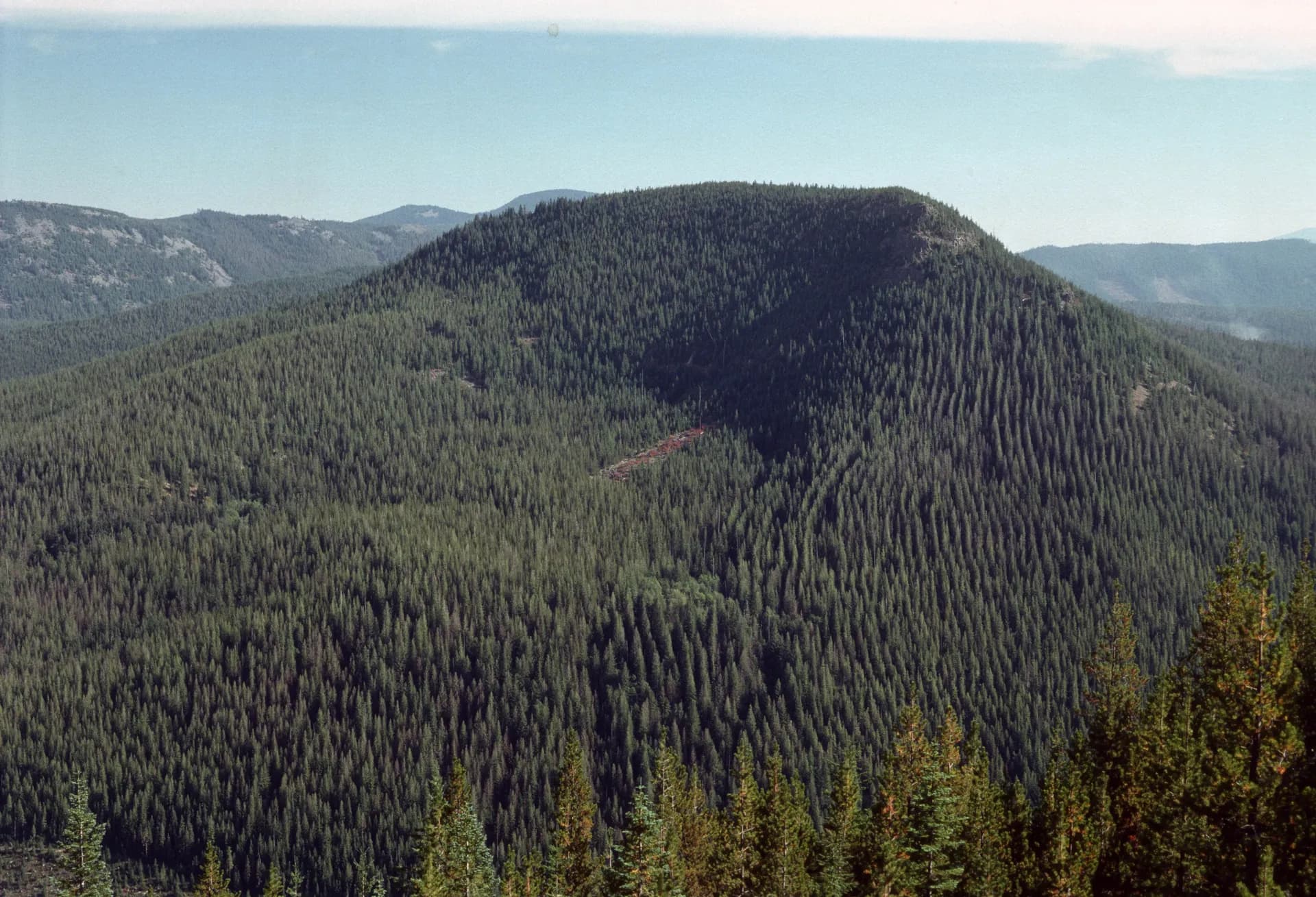
Mount Hood's elevation range, from 500 feet along the Columbia Gorge to 11,250 feet at the summit, creates a remarkable diversity of habitats. The lower slopes are thick with Douglas fir, Western red cedar, and bigleaf maple. As you climb, the forest transitions to Pacific silver fir and mountain hemlock, then to subalpine meadows and krummholz, and finally to alpine rock, ice, and glaciers.
Mammals: Black bears are present throughout the forest, though encounters are uncommon if you store food properly. Roosevelt elk roam the lower elevations, particularly in the Clackamas River drainage. Mountain goats (introduced, not native) live on the upper mountain. Pikas, marmots, and ground squirrels are common in the alpine zone.
Birds: Spotted owls and marbled murrelets inhabit the old-growth stands. Gray jays (camp robbers) will find you at any backcountry camp. In the alpine, look for rosy finches and white-tailed ptarmigan.
Fish: The Sandy, Zigzag, Salmon, and Clackamas rivers support runs of steelhead, Chinook salmon, and coho salmon. Trillium Lake and Lost Lake are stocked with rainbow trout.
Wildflowers: The meadows at Paradise Park, on the Timberline Trail's west side, explode with lupine, Indian paintbrush, bear grass, and avalanche lilies from mid-July through early August. It's one of the best wildflower displays in Oregon.
Tips for Visitors
Start early. Popular trailhead parking lots (Mirror Lake, Ramona Falls, Tamanawas Falls) fill by 9 AM on summer weekends. If you arrive at 7 AM, you'll have your pick of spots.
Bring layers. Mountain weather changes fast. A sunny morning at the trailhead can turn into rain, wind, and near-freezing temperatures at elevation by afternoon. A rain jacket and fleece belong in your pack year-round.
Check river conditions before committing to the Timberline Trail. Glacial river crossings are the primary hazard. Water levels peak in the afternoon on hot days as snowmelt accelerates. Cross early in the morning when flows are lowest.
Treat or filter all water. Giardia is present in many streams. Glacial streams also carry fine sedite sediment that will clog some filters. A UV purifier or chemical treatment works better for glacial water.
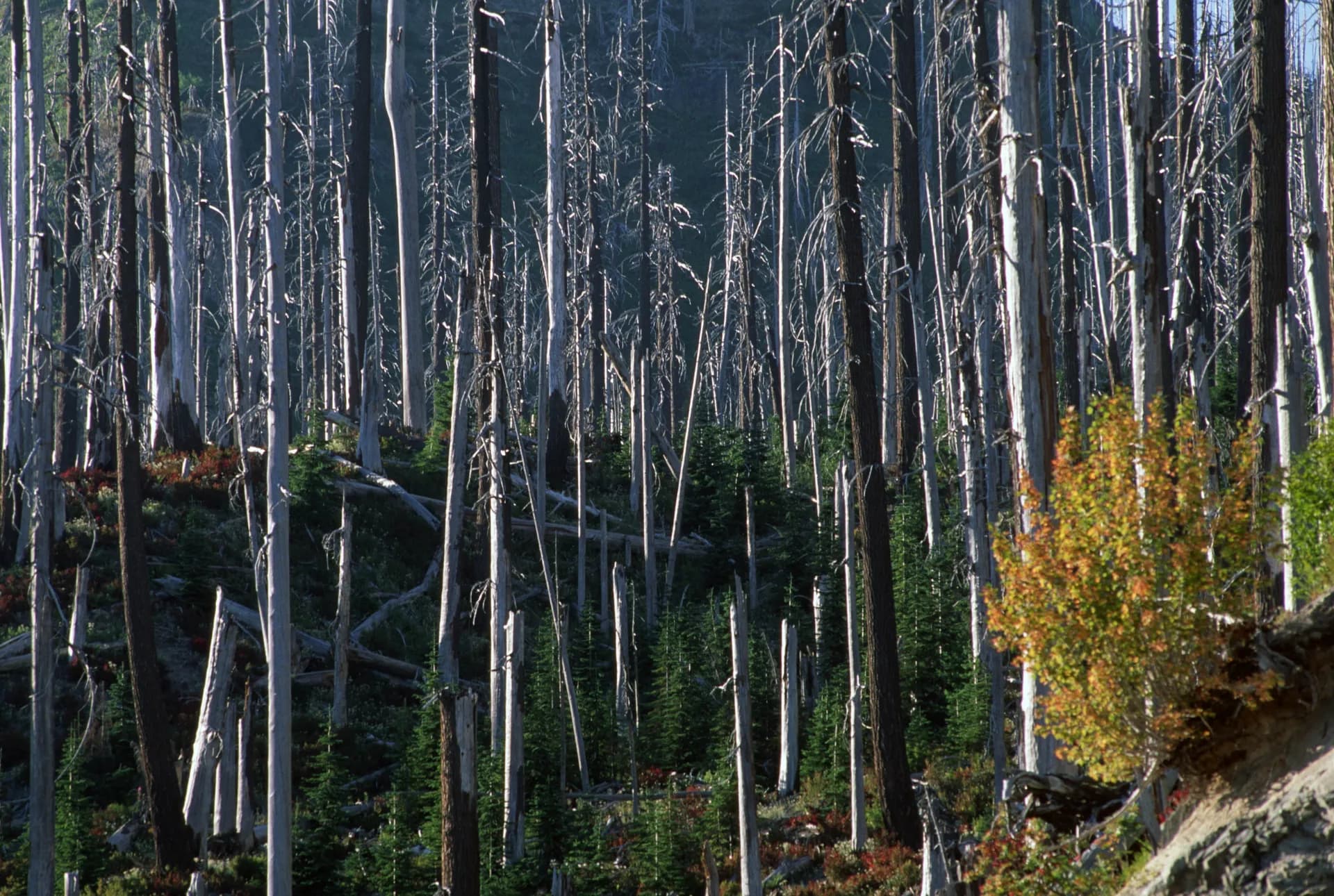
Respect fire restrictions. Mount Hood's forests have burned repeatedly in recent decades. The 2020 Riverside Fire scorched parts of the Clackamas district. Check the forest website or call the Zigzag Ranger Station (503-622-3191) for current fire restrictions before building any fire.
Leave No Trace. This forest gets heavy use, especially close to Portland. Pack out all trash, stay on established trails, and camp on durable surfaces. The alpine meadows are fragile: walking off-trail crushes vegetation that takes decades to recover.
For solitude, go east or south. The east side of the mountain (Badger Creek Wilderness) and the southern reaches (Olallie Lake area, Bull of the Woods Wilderness) see a fraction of the traffic that the US-26 corridor attracts. The trade-off is longer drives on gravel roads, but the payoff is real quiet. Hikers ready to explore further should look at Gifford Pinchot National Forest in southern Washington (about 90 minutes north of Portland) and Deschutes National Forest in central Oregon (about three hours south near Bend). Both offer volcanic landscapes with completely different character.
Food storage and bear safety. Black bears are present throughout the forest. Use bear boxes at developed campgrounds and practice proper food storage in the backcountry. Our national forest camping permit guide covers the basics for planning overnight trips in Mount Hood and throughout the Pacific Northwest forest system.