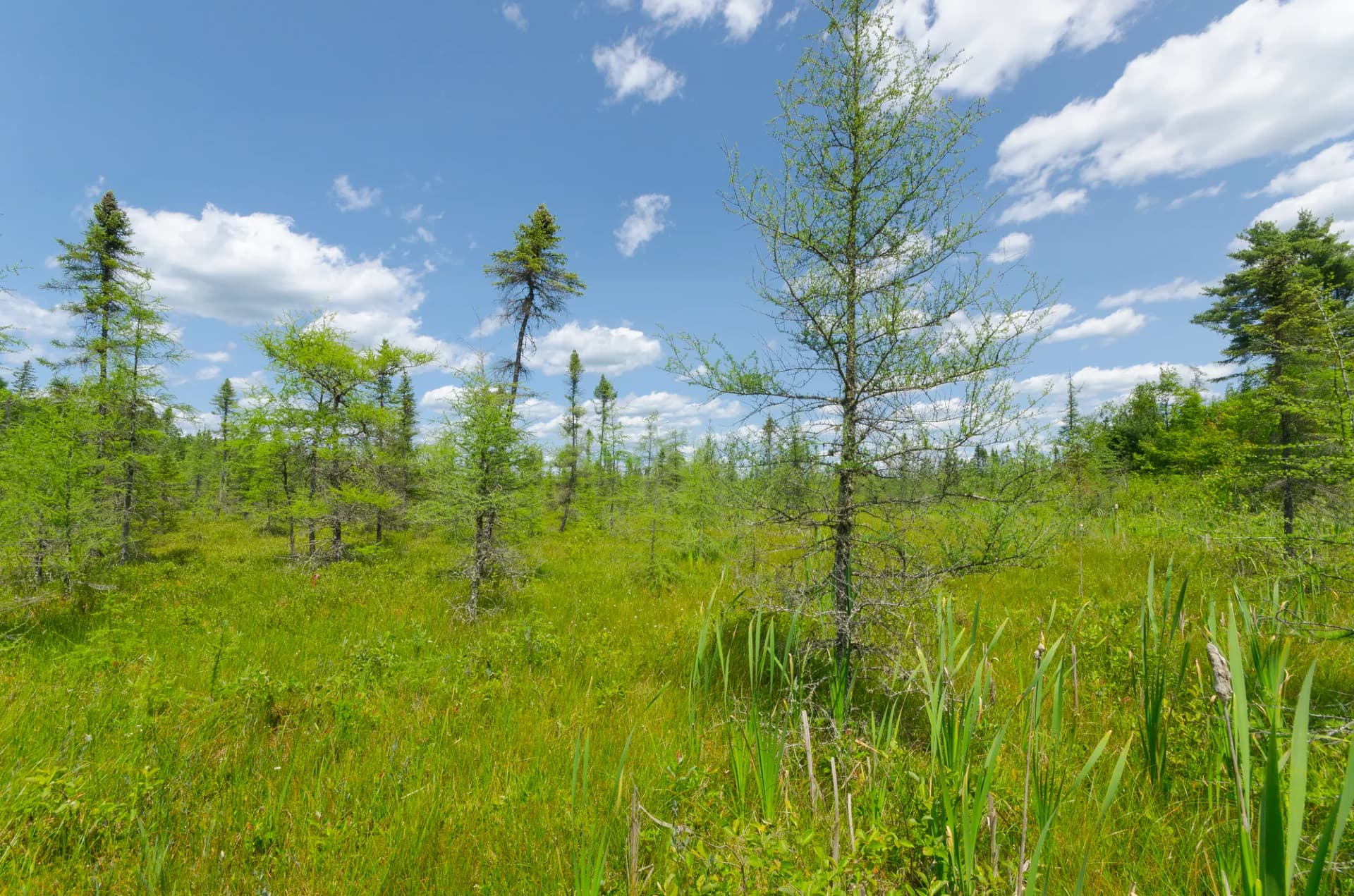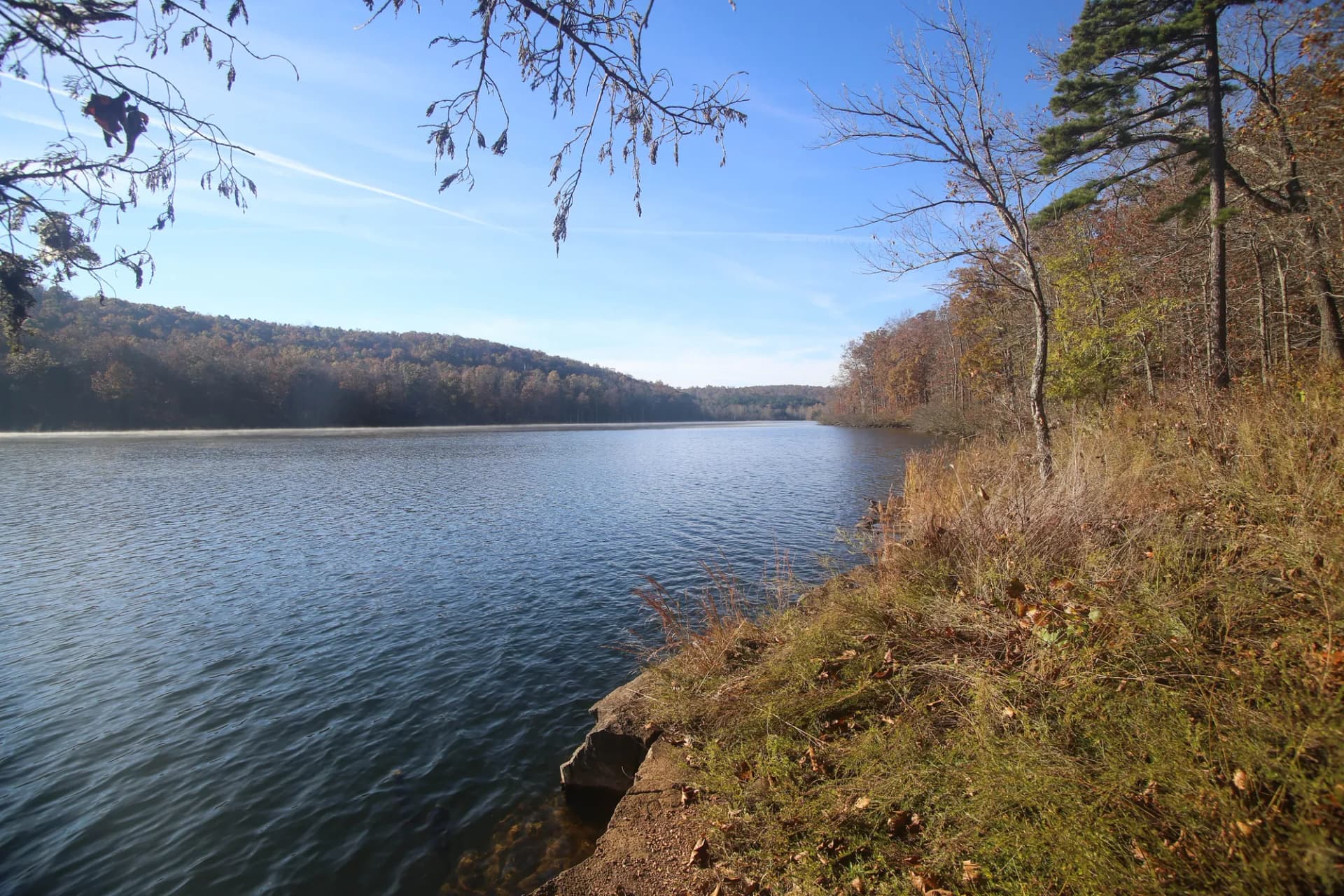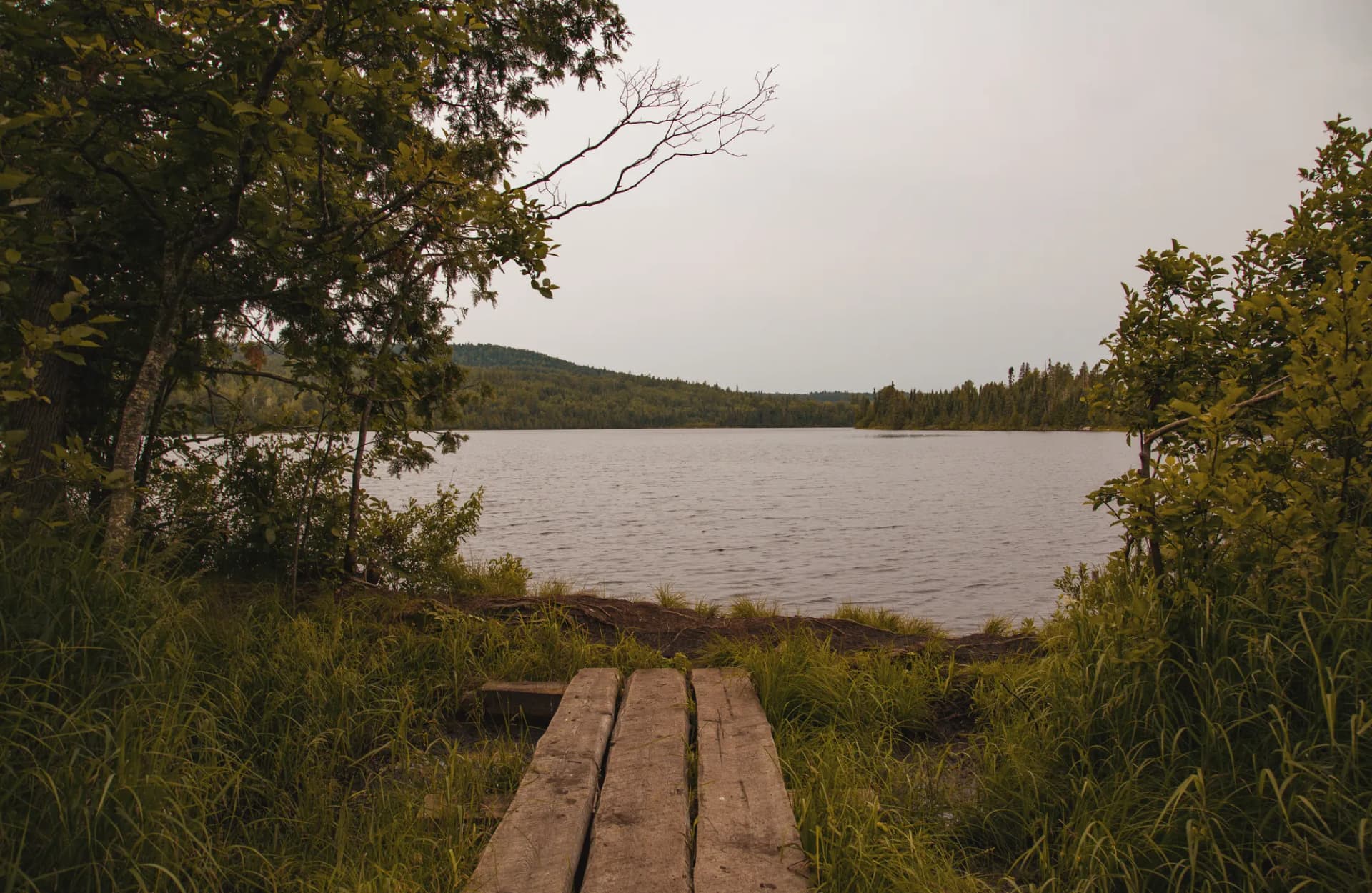
Shawnee National Forest is the only national forest in Illinois, and it occupies a landscape that surprises people expecting flat midwestern farmland. The 289,000-acre forest in the state's southern tip sits at the convergence of the Mississippi and Ohio rivers, where sandstone escarpments rise above bottomland hardwood forest and the hills carry the ecological character of four distinct regions: the Shawnee Hills, the coastal plain floodplains, the interior highlands, and the Mississippi embayment. The result is one of the most biologically diverse areas in the Midwest, with plant and animal communities from all four zones present within the forest boundary.
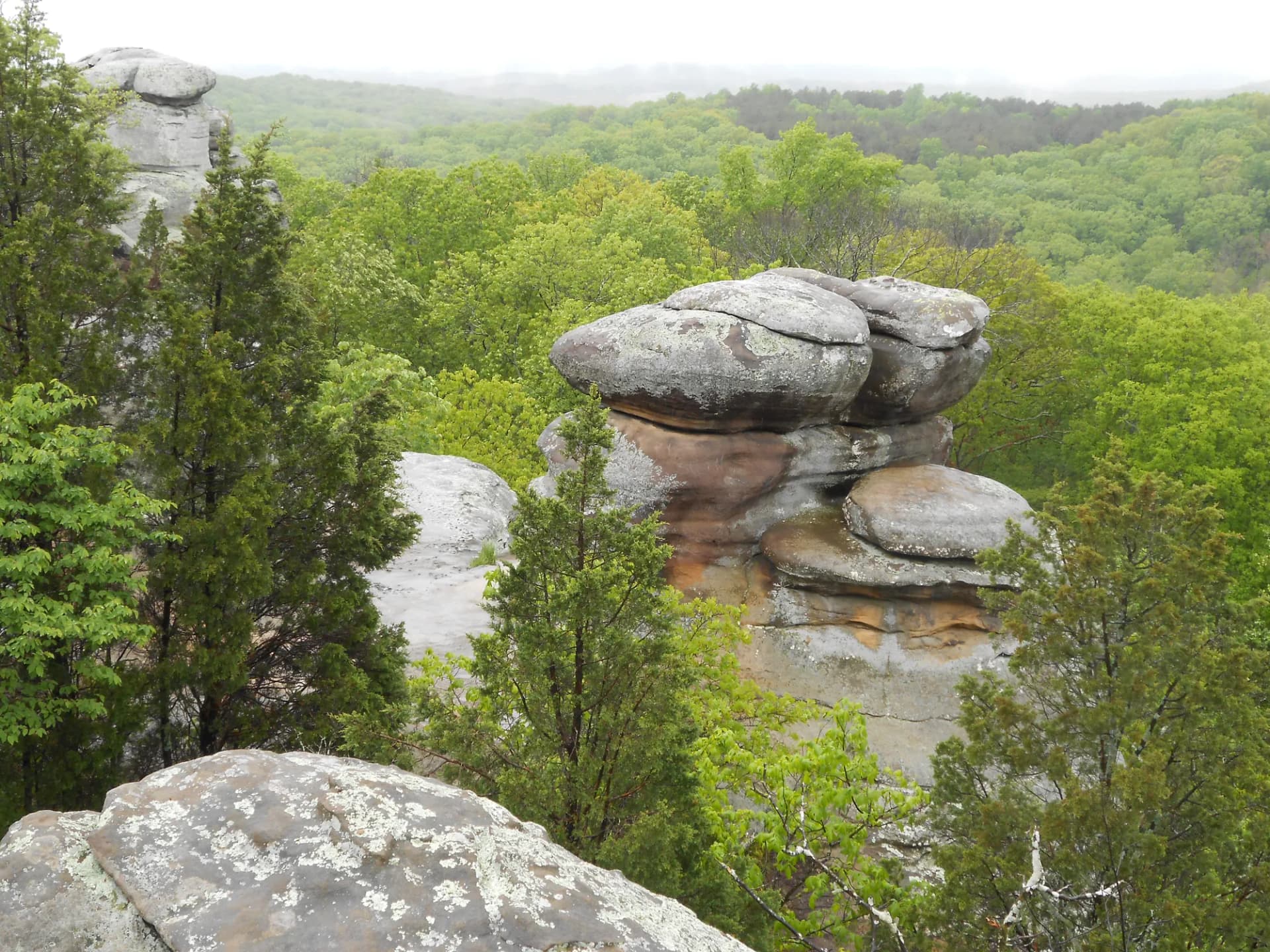
The geology is the defining story of Shawnee. Ancient sandstone and limestone, deposited when this area was seafloor hundreds of millions of years ago, has been exposed and sculpted by weathering into a landscape of bluffs, canyons, arches, and balanced rocks. Garden of the Gods, in the northeast portion of the forest, is the most photographed and visited of these formations. Little Grand Canyon in the west is more dramatic for those willing to put in the miles of the 6-mile loop. Jackson Falls and the Pounds Hollow area offer additional geological variety within the forest's modest 280 miles of trail.
The forest sits within a few hours of millions of people in St. Louis, Chicago (via southward drive), and the smaller cities of southern Illinois. This proximity creates pressure on the most popular areas Garden of the Gods can be genuinely crowded on October weekends but the majority of the forest trail system sees modest use year-round.
Why Shawnee Stands Out
Garden of the Gods: Midwest's Most Dramatic Overlook
The sandstone formations at Garden of the Gods are genuinely extraordinary, rising above the surrounding forest with names like Camel Rock, Anvil Rock, and Mushroom Rock that reflect their eroded shapes. The Garden of the Gods Loop is only 1 mile, but the overlook views extend for miles across the forested hills of far southern Illinois. Fall color from the overlook in October is among the best viewpoints in the interior United States. The area is popular and can be crowded plan for a weekday visit or arrive early on weekends.
Little Grand Canyon
Illinois has no actual canyons by western standards, but Little Grand Canyon near Murphysboro is about as close as the state gets. A 3.5-mile-deep sandstone slot canyon with a seasonal waterfall and dramatic cliff walls earned the feature its name, and the Little Grand Canyon Loop at 6 miles is the most demanding and rewarding hike in the forest. The canyon is notably cooler than the surrounding terrain on hot days, making it a good choice for summer visits.
Ecological Crossroads
The location where the Shawnee Hills meet the Ohio River floodplain creates remarkable biodiversity. Shawnee National Forest has recorded over 1,100 plant species, 50 mammals, and 240 bird species. Fall hawk migration is well-documented at the ridge overlooks. In spring, warblers move through in large numbers. The forest is included in the American Bird Conservancy's Important Bird Areas program.
Best Trails in Shawnee National Forest
The 280-mile trail system includes several shorter signature hikes concentrated in the geological feature areas. The Rim Rock Trail is a 3-mile loop near Elizabethtown with cliff edge views and an ancient Kaskaskia Indian grinding stone. Jackson Falls is a 1.5-mile loop to a sandstone waterfall grotto, one of the most photogenic spots in the forest. The Ohio River Bluffs Trail covers 5 miles of out-and-back along the bluffs above the river. The Camel Rock Trail visits the distinctive balanced rock formation near Garden of the Gods.
Permits and Passes
No permit is required for trail use or dispersed camping. Some developed recreation areas charge day-use fees (as of 2026). The America the Beautiful pass covers fees at participating sites. Veteran pass holders should check the veteran benefits guide for applicable discounts.
Camping
Shawnee has several small, primitive campgrounds. The Pharaoh Campground at Garden of the Gods is walk-in and primitive, with 12 sites that fill quickly on fall weekends. Pounds Hollow Recreation Area has 55 developed sites near a swimming lake and is the most family-oriented camping option. Pine Ridge near the Rim Rock area has 9 primitive sites. Dispersed camping is permitted throughout most of the forest.
When to Visit
Spring (April through June) and fall (September through November) are the prime seasons. April is excellent for wildflowers, particularly in the bottomland areas. Fall color peaks in mid to late October and transforms the Garden of the Gods and Little Grand Canyon viewpoints into something memorable. Summer is hot and humid temperatures can reach the upper 90s in July and August. Ticks and chiggers are active from April through October. Winter is mild and the trails are often hikeable December through February.
Getting There
Shawnee National Forest is in the far southern tip of Illinois. The Harrisburg Ranger District is in Harrisburg (nearest large town), and the Hidden Springs Ranger District is near Jonesboro. US Highway 45 runs through the east side of the forest; Illinois State Highway 127 covers the west. From St. Louis, take I-64 east to Highway 127 south. From Chicago, take I-57 south to US-45 south about a 5-hour drive.
Cell service is limited throughout much of the forest. Download offline maps and check trail conditions before your visit.
Practical Tips
Rattlesnakes and copperheads are present, particularly on rocky trails and near water. They are not aggressive but warrant caution when stepping over rocks or logs. Ticks and chiggers are significant from April through October use DEET and do a full body check after any outdoor activity.
The Garden of the Gods area gets genuinely crowded on fall color weekends (mid-October). The parking lot can fill by 9 a.m. on peak Saturdays. Weekday visits or early morning arrivals solve the crowd problem.
Planning Your Trip
Garden of the Gods and Little Grand Canyon are the must-see destinations for a first visit. Pair them with a night at the Pharaoh Campground at Garden of the Gods or the Pounds Hollow campground for a complete forest experience. For a longer trip, add the Rim Rock Trail and Jackson Falls to round out the geological variety.
See the Leave No Trace principles guide for how to minimize impact on the heavily used overlook areas.