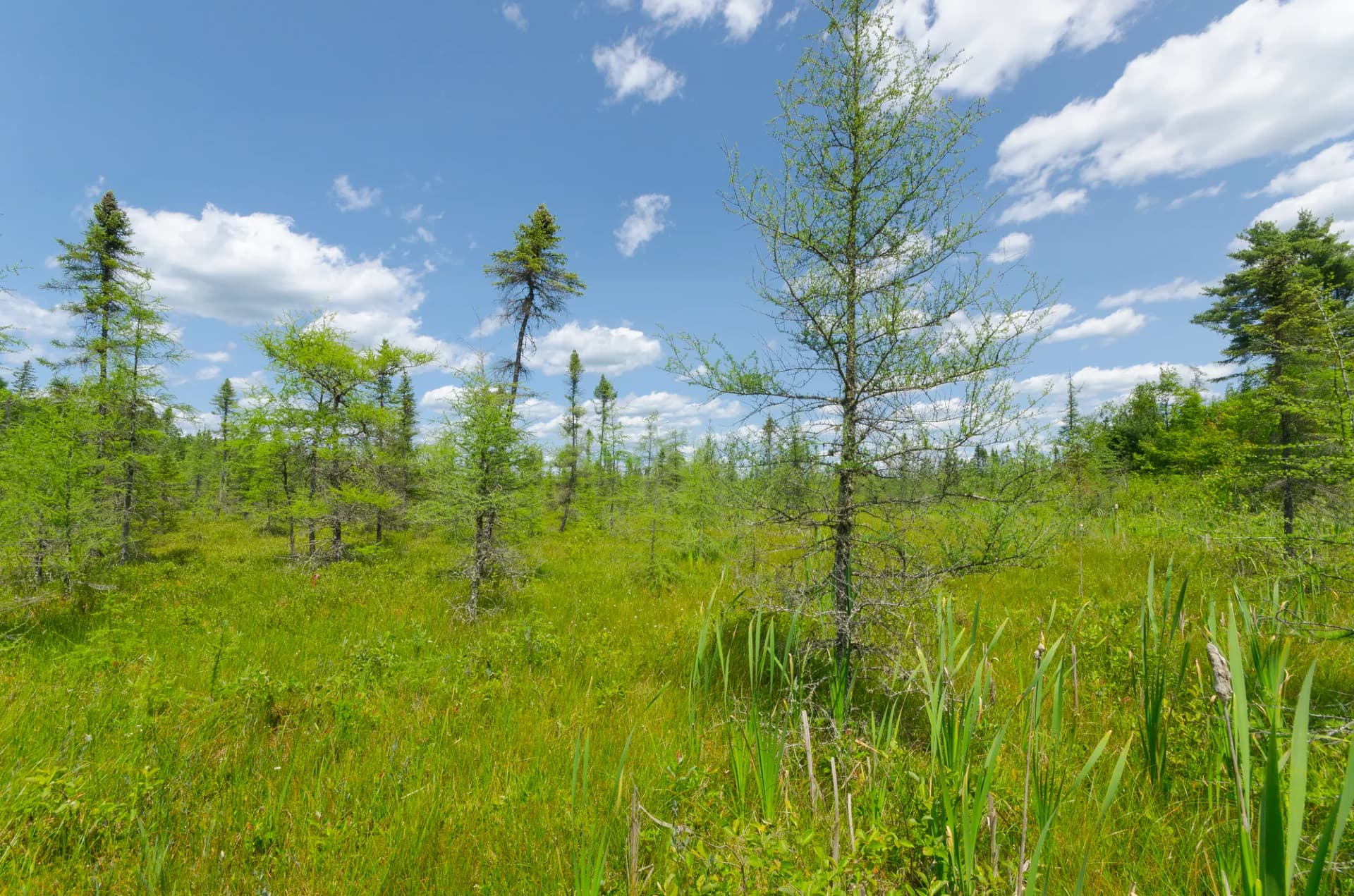
Exploring Chippewa National Forest
Chippewa National Forest encompasses 667,000 acres of northern Minnesota lake country, stretching across parts of Cass, Itasca, and Beltrami counties. Established in 1902, it was one of the first national forests created east of the Mississippi River. The defining characteristic of the landscape is water: more than 1,300 lakes dot the forest, connected by rivers and streams that form one of the most productive freshwater fishing and paddling networks in the Midwest.
The forest sits in the heart of the Leech Lake Band of Ojibwe Reservation, and Leech Lake itself: one of Minnesota's largest inland lakes at 112,000 acres: occupies the center of the forest unit. The surrounding uplands are a mix of aspen, birch, jack pine, and northern hardwoods in various stages of succession after a century of selective logging. The wildlife is remarkable: Chippewa has the highest bald eagle nesting density in the lower 48 states, along with healthy populations of wolves, black bears, moose, and white-tailed deer.
Why Chippewa National Forest Stands Out
Bald Eagle Capital of the Lower 48
No national forest in the contiguous United States has more bald eagle nesting pairs than Chippewa. The combination of hundreds of large, clear lakes, healthy fish populations, and relatively low shoreline development creates ideal conditions for eagles year-round. The Norway Beach area on Leech Lake is one of the most reliable eagle-watching spots in Minnesota. Eagles are visible throughout the year wherever open water exists, and nesting activity runs from late winter through midsummer.
Leech Lake and the Fishing Culture
Leech Lake is famous across the upper Midwest as one of the premier walleye and muskie fisheries in Minnesota. The lake's irregular shoreline, numerous bays, and cold, clear water create ideal conditions for trophy fish. The resort towns of Walker and Federal Dam ring the lake, and a serious fishing culture has developed around Leech Lake over more than a century. The forest's smaller lakes: there are hundreds: offer excellent panfishing, northern pike, and largemouth bass opportunities away from the crowds.
Paddling and Lake Chains
The forest's interconnected lake chains are ideal for multi-day canoe trips. The Turtle River Lake Chain, the Suomi Hills lakes, and numerous smaller routes allow paddlers to spend days moving through the forest without retracing their route. Portages are generally short. The experience in the interior lake country is quieter and more remote-feeling than the Boundary Waters to the northeast, with fewer regulations and no permit lottery.
Best Trails
Chippewa's trail system totals about 160 miles of hiking trails, supplemented by hundreds of miles of forest roads popular with mountain bikers and horseback riders.
The Shingobee Recreation Area Trail is a 5.5-mile loop through mixed forest near Walker, passing the Shingobee River and connecting to the Shingobee Hills: the closest thing to topography in this otherwise flat region. It's the most popular hiking loop in the forest.
The Suomi Hills Trail covers 7.2 miles through a quiet lake-dotted landscape south of Bigfork, passing several small lakes and offering dispersed camping access. The trail is also used as a ski trail in winter.
The Cut Foot Sioux Trail loops 4.8 miles around a series of small lakes near the Cut Foot Sioux Ranger Station, with consistent lake views and bald eagle sightings. One of the best all-ability options in the forest.
The North Country Trail Chippewa Segment covers 9 miles through the eastern portion of the forest, following the North Country National Scenic Trail corridor through birch and aspen forest with periodic lake views. Part of the continuous NCT from North Dakota to Vermont.
The Norway Beach Loop circles the peninsula near the Norway Beach Campground on Leech Lake, combining forest path with open lakeshore walking. The campground eagle-watching area at the tip of the peninsula is a highlight.
The Migis Trail is a 6.0-mile lollipop loop in the northern forest units, passing through jack pine and aspen with access to small fishing lakes. Migis is an Ojibwe word for "cowrie shell": small white pebbles found on local lake shores.
The Foothills State Forest Trail Connector links Chippewa's southern units to the adjacent Foothills State Forest trail system, creating a 8.5-mile point-to-point through varied terrain including aspen clearcuts, mature hardwood, and several creek crossings.
The Star Island Trail is only accessible by boat: a 3.0-mile loop around Star Island in Cass Lake, one of the few island trail systems in the national forest. The island is a National Natural Landmark with old-growth forest and a lake within a lake (Windigo Lake).
Permits and Passes
Day hiking and dispersed camping throughout Chippewa National Forest require no permits and no fees (as of 2026). Developed campground sites require reservations and nightly fees of $16 to $26 (as of 2026), bookable through Recreation.gov.
The America the Beautiful Annual Pass covers day-use fees at developed recreation areas. Veterans and active-duty military qualify for free annual passes: our veteran benefits guide has complete details including both the Military Annual Pass and Access Pass programs.
Camping
Norway Beach Campground is the forest's premier developed campground, with 58 sites on a wooded peninsula jutting into Leech Lake. Sites near the shoreline are the most sought-after and fill weeks in advance during summer weekends. The eagle-watching area at the peninsula tip is a short walk from any site. Open May through October (as of 2026).
Stony Point Campground sits on Leech Lake's east shore with 43 sites in a mixed forest setting. A boat ramp serves campers who bring watercraft. Reservable through Recreation.gov (as of 2026). Open May through October (as of 2026).
Webster Lake Campground offers 22 sites on a smaller, quieter lake in the forest interior. Popular with anglers targeting panfish and northern pike. Open May through September (as of 2026).
Knutson Dam Campground is a small, 14-site campground on the Leech Lake River, popular with canoeists running the river. Open May through September (as of 2026).
When to Visit
June through August is peak season. Lake temperatures warm enough for swimming by mid-June in most years. Fishing is excellent throughout summer, and wildlife viewing peaks in early morning and evening. Black flies and mosquitoes are heaviest in June and early July.
September is arguably the best month: bugs are gone, lakes are warm, fall color arrives by late September, and campgrounds are far less crowded. Walleye fishing is particularly productive in fall.
October and November bring significant hunting activity: blaze orange is recommended in the forest during firearms deer season. The forest turns brilliant gold as aspens peak before the hardwoods.
Winter brings snowmobiling, ice fishing, and cross-country skiing. The Suomi Hills and Shingobee Recreation Area maintain groomed ski trails in season.
Getting There
From Cass Lake: Cass Lake is on US-2 at the northeast corner of Leech Lake and is the closest town to the forest headquarters. The Supervisor's Office is in Cass Lake. Most northern forest trailheads are within 10 to 20 miles.
From Walker: Walker is on the east shore of Leech Lake, about 20 miles from Cass Lake on MN-371. It's the main resort and outfitter town for Leech Lake recreation and has the broadest range of lodging and equipment rental options.
From Bemidji: Bemidji is about 35 miles west of Cass Lake on US-2. Bemidji Regional Airport (BJI) offers flights from Minneapolis, making it the most convenient air gateway for the forest.
Practical Tips
Black bears are present throughout the forest. Use bear-resistant storage or hang food in camp. Our guide to bear canister requirements covers recommended food storage methods. Wolves are also present in Chippewa: sightings are uncommon on popular trails but not rare in the forest interior.
The forest's interior roads are unpaved and some are closed seasonally. Download offline maps before leaving cell range, which is limited throughout most of the forest interior. Mosquitoes and black flies peak in June; bug repellent is essential for early-season visits.
Check current conditions before heading out, particularly for road closures in spring and any prescribed burn activity. Our guide to checking conditions before you go covers the key resources including the USFS Chippewa district websites.
Practice Leave No Trace principles throughout your visit. The lake country ecosystem is sensitive to shoreline disturbance and improper waste disposal: what happens here stays in the water for a very long time.