Louisiana's Only National Forest
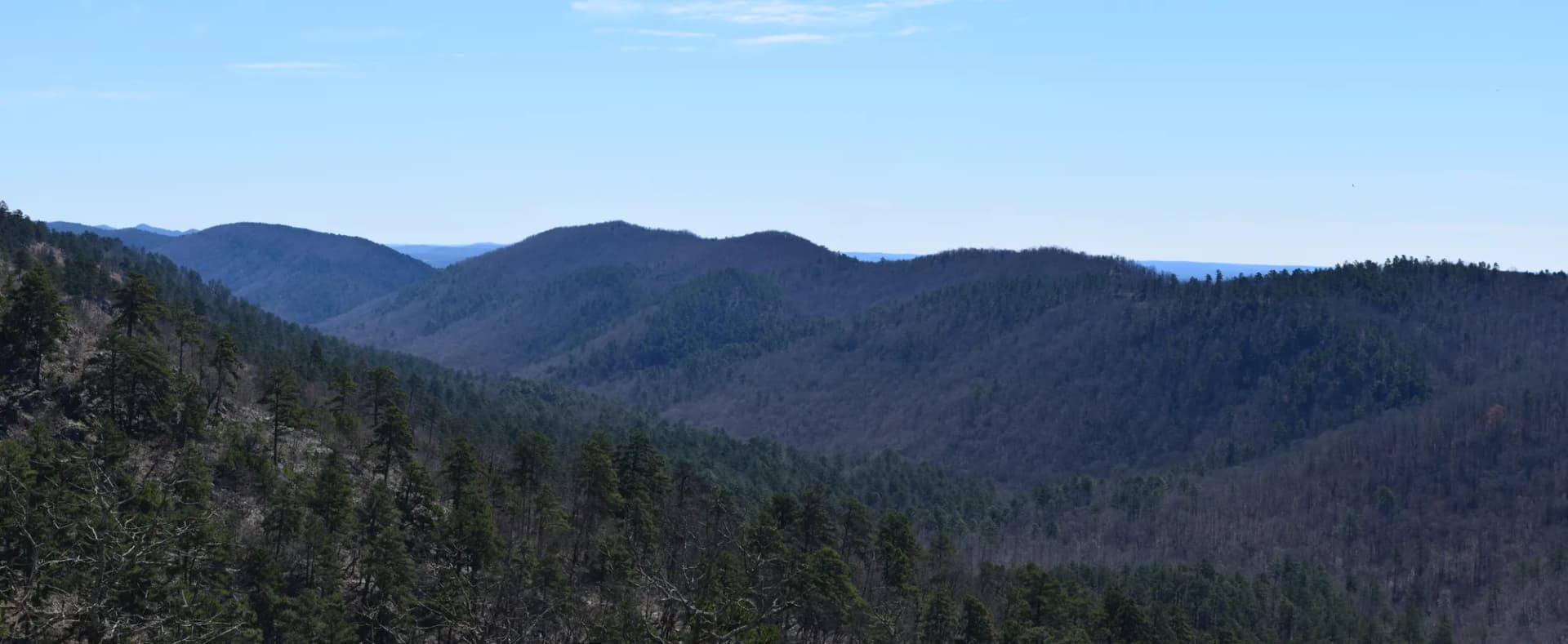
Kisatchie National Forest is Louisiana's sole national forest, a 604,000-acre system spread across six separate units in central and northwestern Louisiana. Established in 1930, the forest preserves a landscape that stands apart from the popular image of flat, swampy Louisiana: the Kisatchie Hills unit contains sandstone bluffs, spring-fed bayous, and ridgelines with views of rolling longleaf pine country that feel more like the Ozarks than the Gulf Coast lowlands.
Louisiana has relatively few large public lands, making Kisatchie an important recreational resource for residents of Alexandria, Natchitoches, and Shreveport. The forest is not a mountain destination: the highest point is around 400 feet. Its value lies in the longleaf pine ecosystem, the exceptional birding, and the serene paddling and hiking it offers in a region that has limited comparable public land.
Why Kisatchie National Forest Stands Out
Longleaf Pine Savanna Restoration Longleaf pine once dominated the southeastern United States from Virginia to Texas. Today, less than 3% of the original longleaf range remains as intact habitat. Kisatchie is one of the significant public land areas where the USFS is actively restoring longleaf pine and its associated wiregrass understory through prescribed burning. The result is an open, park-like forest with a grassy understory and a distinctive ecological character. The Longleaf Vista Interpretive Trail specifically showcases this restoration work.
Kisatchie Hills Wilderness The 8,700-acre Kisatchie Hills Wilderness is the heart of the forest's hiking experience. Sandstone outcrops, bluffs, and clear spring-fed bayous create a dramatically different landscape from the surrounding flatlands. The wilderness designation protects this terrain from development, and the trail network within and adjacent to the wilderness offers some of the most distinctive hiking in the Deep South.
Wild Azalea Trail At 31 miles, the Wild Azalea National Recreation Trail is one of the longest hiking trails in Louisiana. Named for the native azalea shrubs that bloom pink and white along its length in March and April, the trail traverses multiple ecosystems and can be completed as a day hike (in sections) or as a multi-day backpacking trip. The spring bloom window is genuinely spectacular, with dense azalea thickets flowering along the trail corridor.
Best Trails
Kisatchie's 100 miles of maintained trail cover the forest's six units across a variety of terrain types.
The Wild Azalea National Recreation Trail (31.0 miles, moderate) is the forest's signature long trail, traversing multiple units through longleaf pine, bottomland hardwood, and spring azalea habitat.
The Kisatchie Bayou Trail (5.8 miles, easy) follows Kisatchie Bayou through the Hills unit past sandstone bluffs and clear water, one of the most scenic short hikes in Louisiana.
The Longleaf Vista Trail (3.2 miles, easy) visits the Longleaf Vista interpretive area with information about longleaf pine restoration, popular with birders seeking Red-cockaded Woodpeckers.
The Backbone Trail (7.4 miles, moderate) traverses the sandstone ridge system of the Kisatchie Hills Wilderness, offering the most rugged terrain in the forest.
The Sugar Cane National Recreation Trail (10.2 miles, moderate) passes through upland pine and bottomland hardwood in the Winn unit, connecting two trailheads through diverse forest ecosystems.
The Kincaid Lake Loop (5.0 miles, easy) circles Kincaid Lake in the Calcasieu unit, the largest lake in the forest, through mixed pine-hardwood forest with fishing access along the way.
The Little Bayou Trail (4.4 miles, easy) explores a quiet bayou corridor in the Caney unit with excellent birding for bottomland species.
The Caroline Dorman Nature Trail (3.6 miles, easy) honors Caroline Dorman, a pioneering Louisiana botanist and naturalist who championed the creation of Kisatchie National Forest.
Permits and Passes
Day hiking and dispersed camping in Kisatchie National Forest require no permit and no fee as of 2026. The Kisatchie Hills Wilderness requires no permit for day use or overnight camping as of 2026. Developed campground sites require reservation and fee through Recreation.gov.
America the Beautiful Annual Passes cover developed campground fees at federal recreation sites. Veterans and active-duty service members receive free day-use access to federal lands. See /learn/america-the-beautiful-pass-veterans and /learn/veteran-benefits-national-forests for complete information.
Camping
Kincaid Lake Recreation Area (74 sites) is the largest developed campground in the forest, on the shore of Kincaid Lake in the Calcasieu unit. Open year-round with reservations at $18/night (as of 2026). Boat ramp and swimming beach on site.
Caney Lakes Recreation Area (60 sites) serves the Caney unit with two adjacent lakes, good for fishing and paddling. Open year-round at $18/night (as of 2026). Reservations available through Recreation.gov.
Kisatchie Bayou Recreation Area (25 sites) puts campers adjacent to the bayou and trailhead in the Hills unit. First-come, first-served at $12/night (as of 2026). Popular with hikers and paddlers.
Dogwood Campground (17 sites) in the Catahoula unit is a smaller, quieter option. First-come, first-served at $14/night (as of 2026).
When to Visit
October through February is the prime hiking season: mild temperatures, low humidity, and high visibility through the open longleaf forest. Prescribed burns often occur in late winter, which can temporarily affect trail access but improve wildlife habitat.
March and April bring the wild azalea bloom, the forest's signature seasonal event. The Wild Azalea Trail's name bloom peaks in mid-to-late March in most years, with April providing a longer window.
May and June transition into increasingly hot and humid conditions. Early morning visits are rewarding in May.
July through September the heat and humidity make extended hiking uncomfortable. Fishing, kayaking, and swimming at Kincaid Lake are the most popular summer activities.
Getting There
From Alexandria (25 miles, 35 minutes): US-71 north from Alexandria to Natchitoches, or LA-28 west into the Kisatchie Hills unit. Alexandria (Cenla area) is the largest city near the forest center.
From Natchitoches (20 miles, 30 minutes): LA-6 east or LA-119 south provide access to the Kisatchie Hills unit from Natchitoches, one of the oldest European settlements west of the Mississippi.
From Shreveport (90 miles, 1 hour 30 minutes): US-84 or I-49 south to the Bienville or Vernon units in the northern and western portions of the forest.
Practical Tips
American alligators inhabit the bayous, bottomlands, and lakes throughout the forest. Keep a respectful distance from water's edge, particularly at dawn and dusk when alligators are most active, and keep pets leashed and away from the water.
Venomous snakes, including cottonmouth and copperhead, are present throughout the forest. Watch where you step and place your hands, particularly on warm days when snakes sun themselves on rocks and logs.
Check current fire closures before any visit: prescribed burns are routine in the longleaf units and can close portions of the forest temporarily. Current conditions and closures are available at /learn/checking-conditions-before-you-go. Practice Leave No Trace on every visit: /learn/leave-no-trace-7-principles.