Georgia's Piedmont Forest
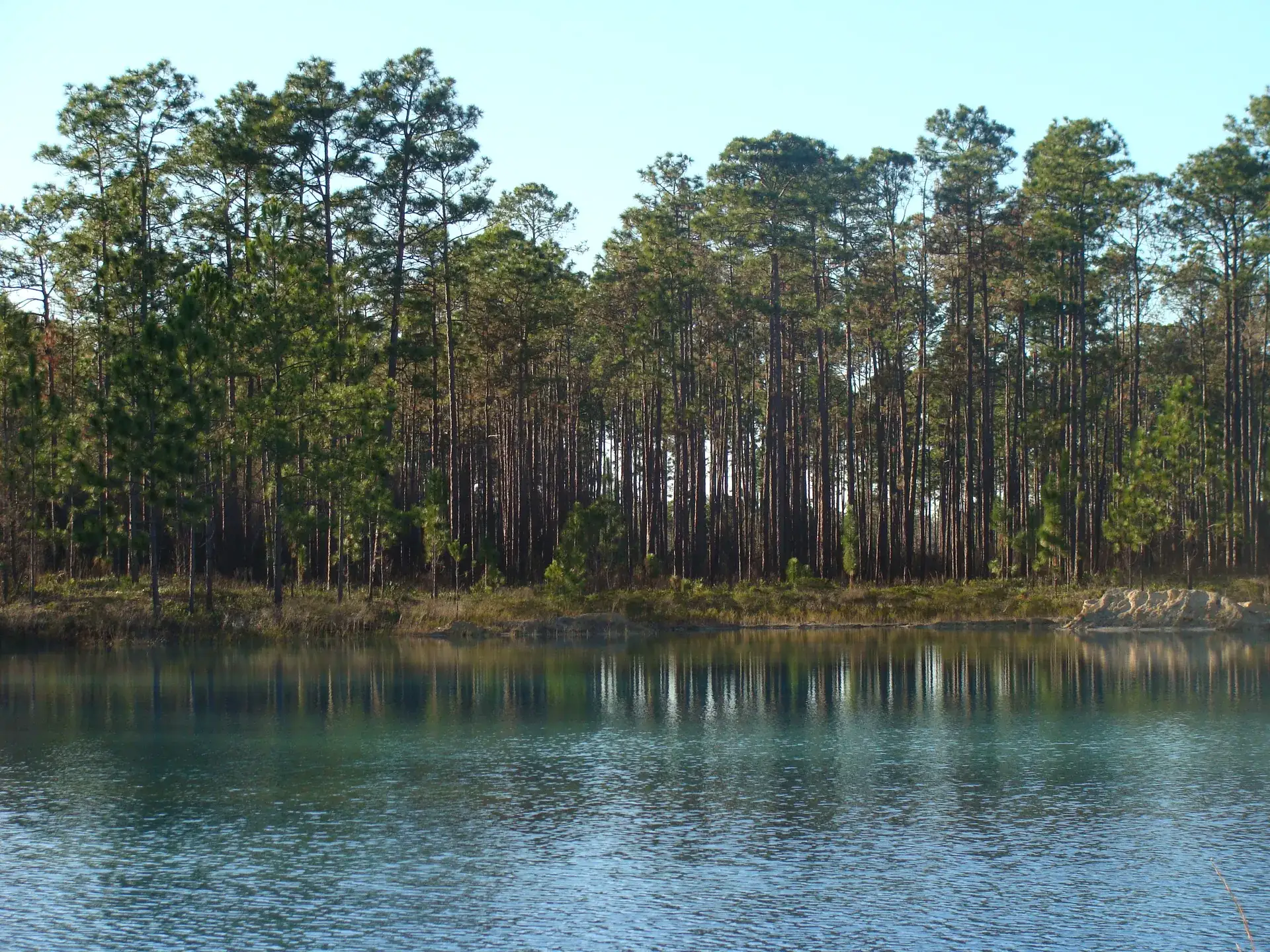
Oconee National Forest occupies approximately 115,000 acres of the Georgia Piedmont, sitting between the Blue Ridge Mountains to the north and the coastal plain to the south. It forms the eastern portion of the combined Chattahoochee-Oconee National Forests administrative unit, sharing a supervisor's office with the much larger Chattahoochee section in Gainesville. The Oconee section is the smaller and less visited of the two, but it serves an important role: protecting watershed lands for the Oconee River drainage and providing public recreation space in a part of Georgia where national forest land is otherwise absent.
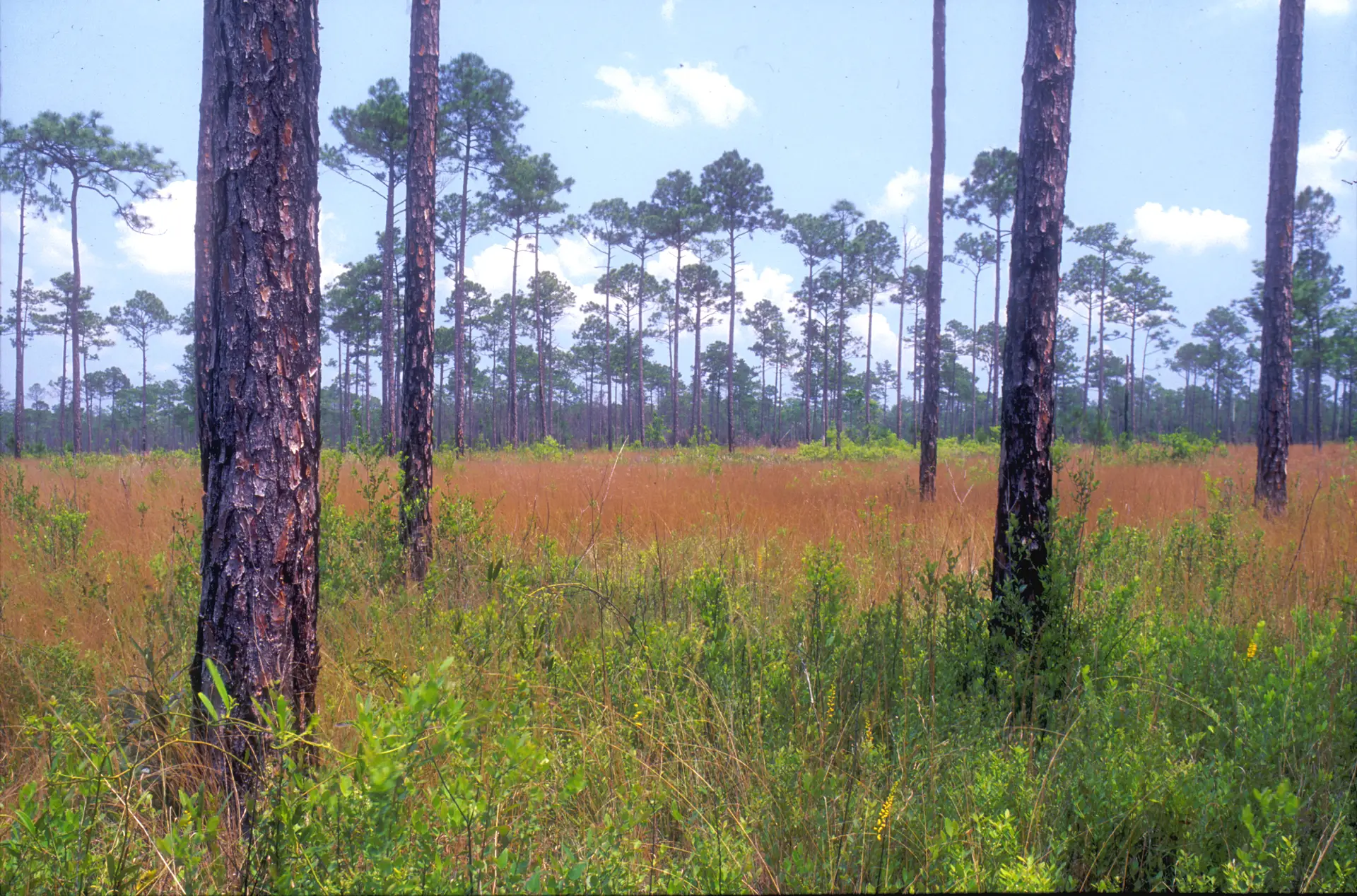
The landscape is quintessentially Piedmont: gently rolling red clay hills, second-growth hardwood forest (primarily oaks, hickories, and sweetgums over an understory of dogwood and redbud), and stream corridors lined with bottomland hardwoods. The elevation rarely exceeds 700 feet. There are no dramatic peaks, no granite domes, no waterfalls to rival Raven Cliff. What the Oconee section offers is accessible, quiet forest in a pleasant climate, with good fishing, birding, and the kind of low-intensity recreation that works well for families and casual hikers.
Oconee River Watershed
The Oconee River and its tributaries drain the forest, and the river corridor is the primary natural feature in the section. Several trail segments follow creek and river margins through bottomland hardwood forest, with excellent opportunities for wildlife observation and fishing. The river supports largemouth bass, catfish, and a variety of panfish. Kayaking and small-boat fishing are popular in the calmer sections.
Lake Sinclair, a Georgia Power reservoir on the Oconee River, forms the eastern boundary of the forest in places. The lake provides additional recreation opportunities including fishing, swimming, and lakeside camping at the USFS facility near the lake shore.
Hitchiti Experimental Forest
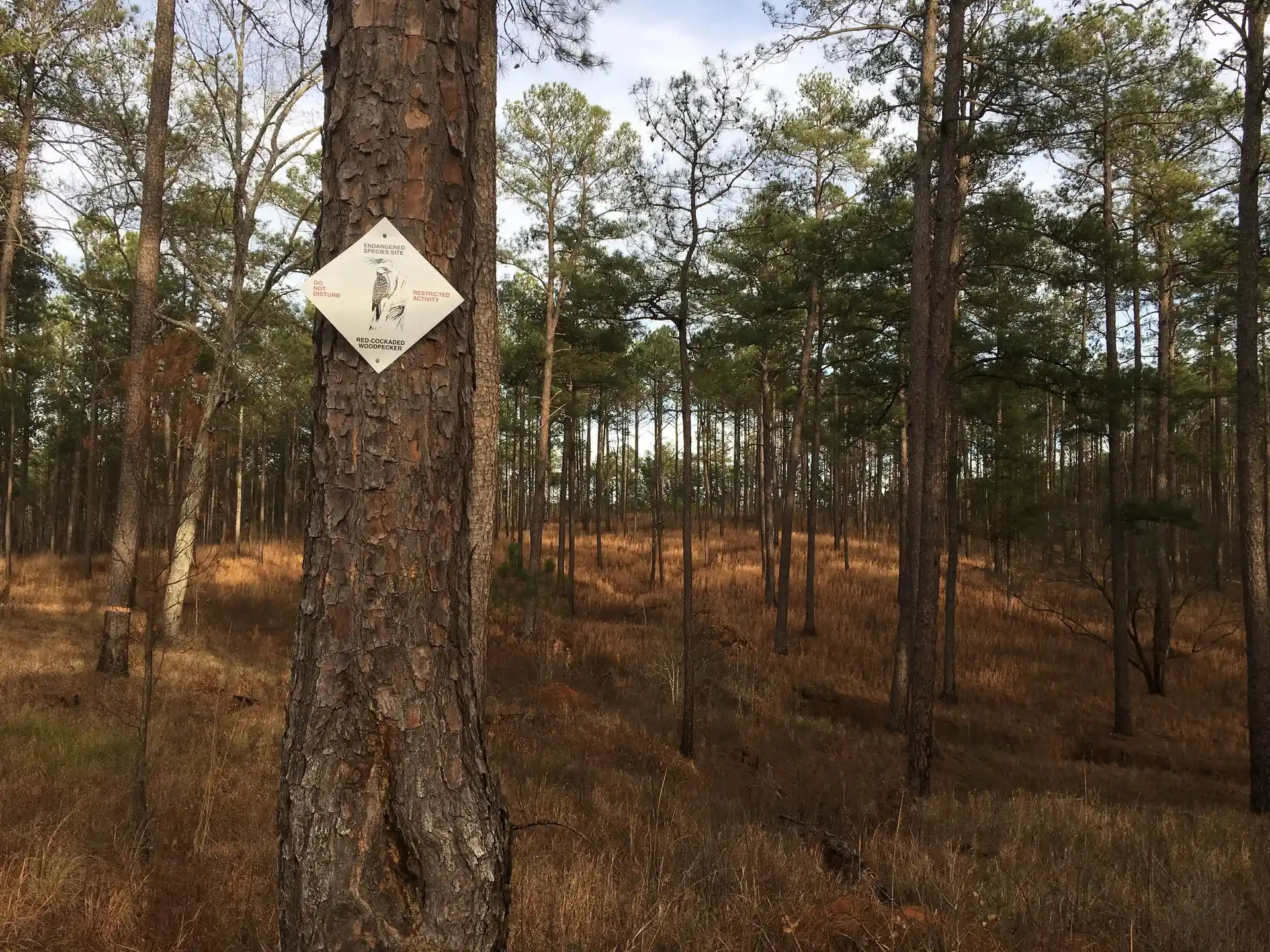
The 1,200-acre Hitchiti Experimental Forest within the Oconee section has been a continuous ecological research site since 1931, one of the longest-running forest research installations in the eastern United States. Scientists have used this area to study fire ecology, wildlife habitat, forest succession, and watershed hydrology in the Piedmont setting. The research conducted here has shaped USFS management practices for Piedmont forests across the Southeast.
Best Trails
Oconee River Trail (9.0 miles, out-and-back) follows the Oconee River corridor through bottomland hardwood forest with excellent birding and fishing access. The trail is mostly flat and well-suited for hikers of any ability level.
Lake Sinclair Trail (6.5 miles, loop) circles a portion of Lake Sinclair's shoreline through mixed forest with lake views and fishing access at several points.
Murder Creek Trail (8.0 miles, out-and-back) follows a longer drainage through the forest interior, named for the historical events that gave many Georgia Piedmont landmarks their colorful place names.
Redlands Trail (7.0 miles, loop) traverses the Redlands area of the forest with moderate elevation change through mixed hardwood uplands.
Wise Creek Trail (5.0 miles, out-and-back) explores a tributary stream corridor with good birding in the stream-side vegetation.
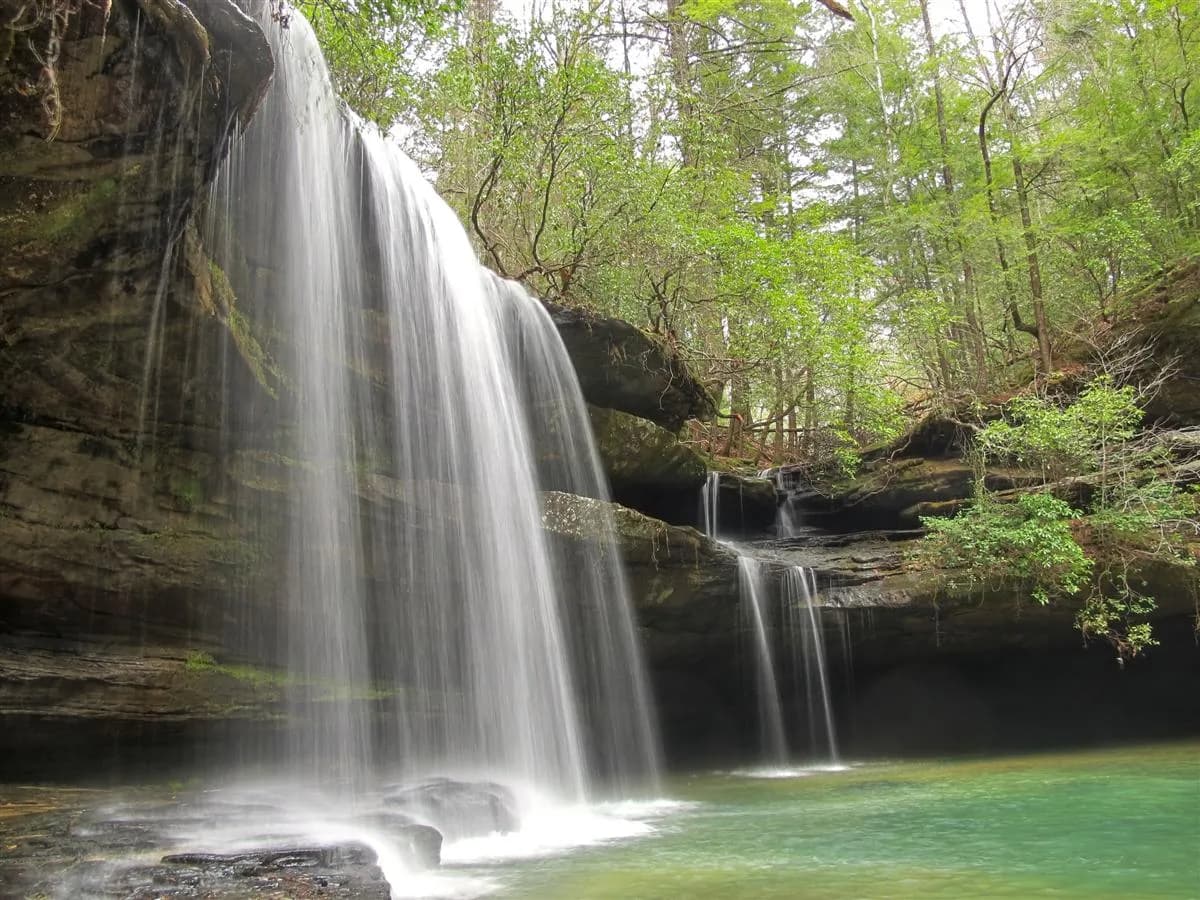
Falls of Falls Creek (3.0 miles, out-and-back) is one of the more scenic short hikes in the Oconee section, reaching a waterfall cascade on Falls Creek after a short forest walk.
Socapatoy Trail (4.5 miles, out-and-back) follows Socapatoy Creek through varied forest terrain with several creek crossings.
Permits and Passes
No permit is required for day hiking or dispersed camping in Oconee National Forest (as of 2026). Developed campground fees are modest and generally first-come, first-served. America the Beautiful passes are accepted at fee sites.
Veterans and permanently disabled individuals may qualify for federal discount passes. See veteran benefits in national forests for details.
Camping
Redlands Campground and Lake Sinclair Campground provide basic developed camping year-round, reflecting the Piedmont's mild climate. Both are small and first-come, first-served. The forest also allows dispersed camping following general USFS rules; the dispersed camping guide covers applicable standards.
When to Visit
Spring (March through May) is the best season: mild temperatures, wildflowers in the understory, and peak songbird migration through the river corridors. Fall (September through November) is the second-best window, with hardwood color and comfortable hiking temperatures. Summer is warm and humid but the forest remains accessible. Winter hiking is mild by national standards.
Check conditions at checking conditions before you go. Copperhead snakes and timber rattlesnakes are present in the Piedmont; watch where you step on warmer days. Practice Leave No Trace principles throughout.
Getting There
From Macon, take US-441 north approximately 50 miles to Eatonton, the primary gateway town for the Oconee section. From Atlanta, take I-20 east to Madison, then US-441 south to Eatonton, approximately 100 miles. The Oconee National Forest ranger district office is located in Eatonton. The ranger district can provide maps, current trail conditions, and information on dispersed camping areas throughout the section. Eatonton itself is worth a brief stop: it is the birthplace of author Joel Chandler Harris and the home of the Uncle Remus Museum, which adds some cultural context to a day outdoors in the Georgia Piedmont.